Fort Worth & Tarrant County, Texas
Foundation Repair in Fort Worth, Where the Clay Swells, Shrinks and Moves Slabs
Foundation repair in Fort Worth usually starts with something small: a crack climbing the brick beside a window, or a door that will not latch after a dry summer. Under much of the city sits clay that changes volume with the weather, and the houses on it move along with it. This page explains why, what the city asks for before any repair, and what published prices look like.
Much of Fort Worth sits on clay that swells when wet and shrinks in drought. National guides put a typical foundation repair at $2,200–$8,200 (Fixr, 2026) and each pier at $1,000–$3,000. The city requires a permit and engineered plans for every residential foundation repair.
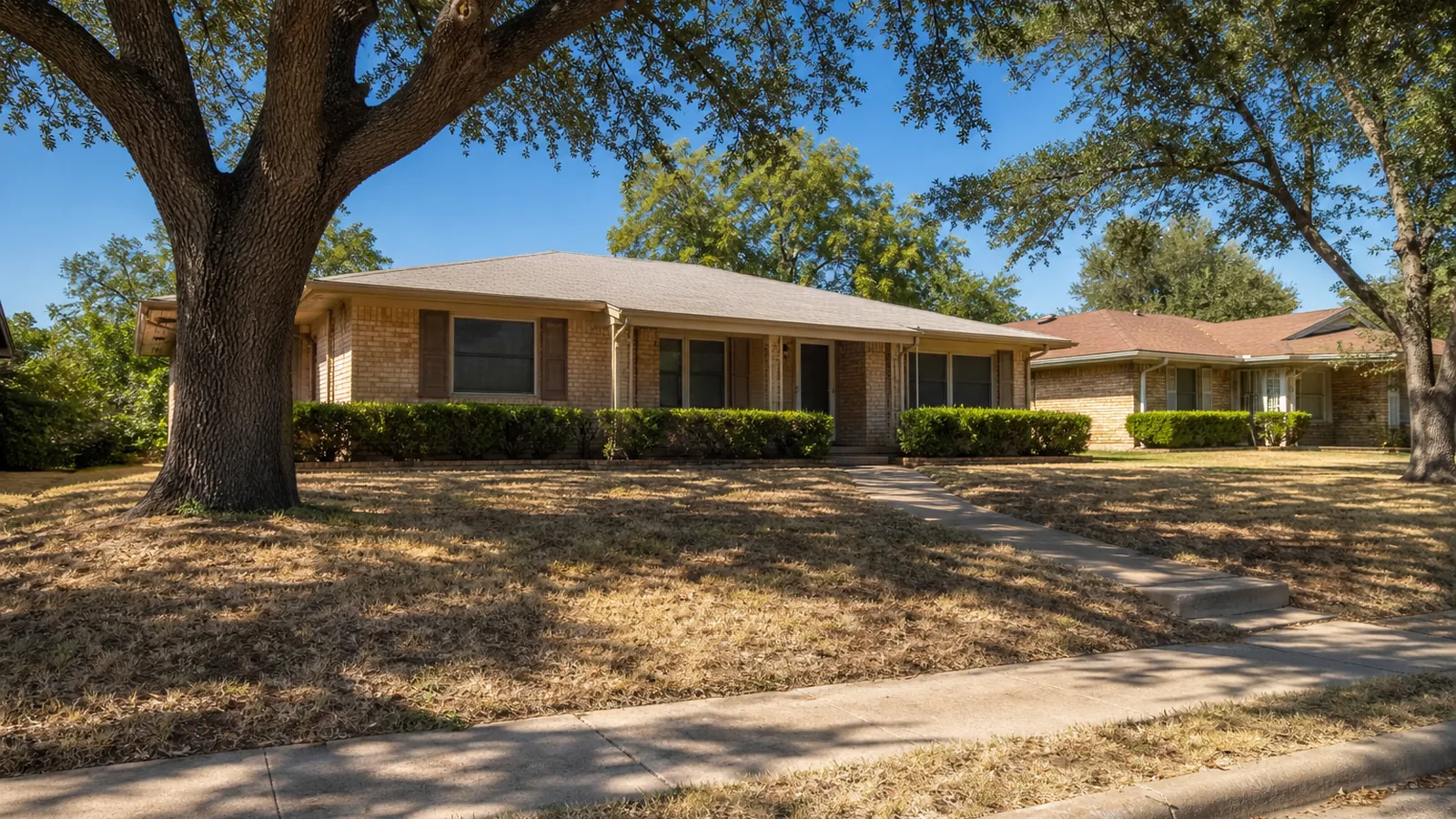
Why does foundation repair in Fort Worth come up so often?
Start with the ground. The USDA soil survey for Tarrant County lists Sanger clay as the county's most extensive soil, and its official description says it opens cracks 1 to 3 inches wide and more than 20 inches deep when dry. Sanger, Slidell, Houston Black and Heiden are among the county's Vertisols, the shrink-swell clay order, which make up about 22% of its mapped major soils. Under the NRCS Texas rating for houses on concrete slabs, about 97% of the county's rated land is limited, mostly for high shrink-swell (USDA NRCS).
The weather supplies the swings. Dallas/Fort Worth logged a record 71 days at 100°F or hotter in 2011, then a record 62.61 inches of rain in 2015, with 16.96 inches in May alone (NWS Fort Worth). Clay that pulls away from a slab one year and pushes back against it a few years later is what bends brick and racks door frames.
What the city asks for before anyone lifts a slab
Fort Worth requires a building permit and engineered plans for every residential foundation repair (City of Fort Worth Development Services). The city's residential remodel checklist, revised May 27, 2026, names two documents for a foundation repair: engineered foundation plans and an engineered structural letter. The permit can be pulled by a building contractor registered with the city, or by an owner working on a homesteaded primary residence.
In practice, the engineer's design sets how many piers go in and where they go, and the permit is how the city knows the work was planned. Ask anyone who bids your job whose engineer will seal the plans and whether the permit is in the price. The inspection and engineer page lays out the order of steps.
Three pages for Fort Worth foundations
- Slab foundation repair: pilings, piers and post-tension slabsEdge drop or center lift, pressed pilings versus steel piers, and where foam lifting fits.
- Pier and beam leveling for older raised floorsShims, new pads, rotted sills and beams in Fort Worth's early houses, with the costs.
- Foundation inspection and the engineer's letterWhat Fort Worth asks for with a repair permit, what an inspection measures, and how to check who you hire.
- Fort Worth foundation repair cost guideNational ranges for piers, leveling, engineer reports and crack sealing, each credited to its guide.
Read the ground, then the house
- Fort Worth ground: clay, limestone and the drought-rain cycleThe county's four belts of rock and soil, the NRCS slab ratings, and the heat and rain records behind the movement.
- What each crack, gap and sticking door usually meansBrick, drywall, doors, floors, trim and tile, one sign at a time, with the page that covers the fix.
Slab on grade or pier and beam: which one is under your house?
Fort Worth's housing spans more than a century. About 43% of the city's homes were built in 2000 or later and 34% before 1980 (U.S. Census ACS 2020–2024). The city's historic districts reach further back: most of Fairmount went up between 1905 and 1920, and Hillcrest mainly from 1925 to the late 1930s (City of Fort Worth Historic Preservation).
- Raised floors on piers and beams. Many houses from those early decades sit over a crawl space. Look for an access hatch or vents in the skirting. See pier and beam leveling.
- Slabs on grade. Most newer houses rest on a concrete slab, and many newer slabs are post-tensioned, with steel tendons cast into the concrete. See slab foundation repair.
The type of foundation decides the repair method, how the crew reaches it, and much of the price.
Who does the work, and where this site fits
Texas has no state license for foundation repair. The Texas Department of Licensing and Regulation does not list it among the programs it regulates, and a 2013 bill that would have created one failed in the Texas House (Texas Legislature Online). Fort Worth's own check is contractor registration with Development Services, which is a yearly registration, not a test of skill.
That leaves the engineer's sealed plan and your own questions as the main safeguards. This site is an independent local resource: it explains the ground, the rules and the published prices, and it does no repairs. A request sent through the form goes to one independent foundation specialist who works in Fort Worth, and that specialist pays this site for the referral.
Questions homeowners ask
Why do Fort Worth foundations move more in some years than others?
Because the clay under them follows the rain. Sanger clay, the county's most extensive soil, opens cracks 1 to 3 inches wide when it dries out (USDA NRCS). Dallas/Fort Worth went from a record 71 days of 100°F heat in 2011 to its wettest year on record in 2015 (NWS). Swings that large shrink and swell the ground under a slab unevenly.
Who decides how many piers go under the house?
An engineer, in Fort Worth's case. The city requires engineered plans and an engineered structural letter with every residential foundation repair permit, and the plan sets pier count and spacing from measured floor elevations. Ask to see that plan before you sign, and be wary of a pier count quoted before anyone has measured the house.
Will fixing the foundation close the cracks in my walls?
Some of them. Lifting a slab or re-shimming a raised floor can narrow brick and drywall cracks and free sticking doors, but many cracks stay open and need patching, and new hairline cracks can show up as the house settles onto its new support. Ask whether patching and door adjustments are in the bid or priced separately.
Sources
- USDA NRCS Official Series Description: Sanger series
- USDA NRCS Web Soil Survey (Tarrant County, Texas soil survey)
- National Weather Service Fort Worth: DFW top 10 monthly and annual rainfall
- City of Fort Worth Development Services: Residential Permitting
- U.S. Census Bureau, American Community Survey 2020-2024: year structure built, Fort Worth city
What is the house doing?
One line is plenty: a crack up the brick, a door that quit latching, a floor that tilts toward the kitchen. One independent foundation specialist who works in Fort Worth will get in touch to talk it over.